OS-8260
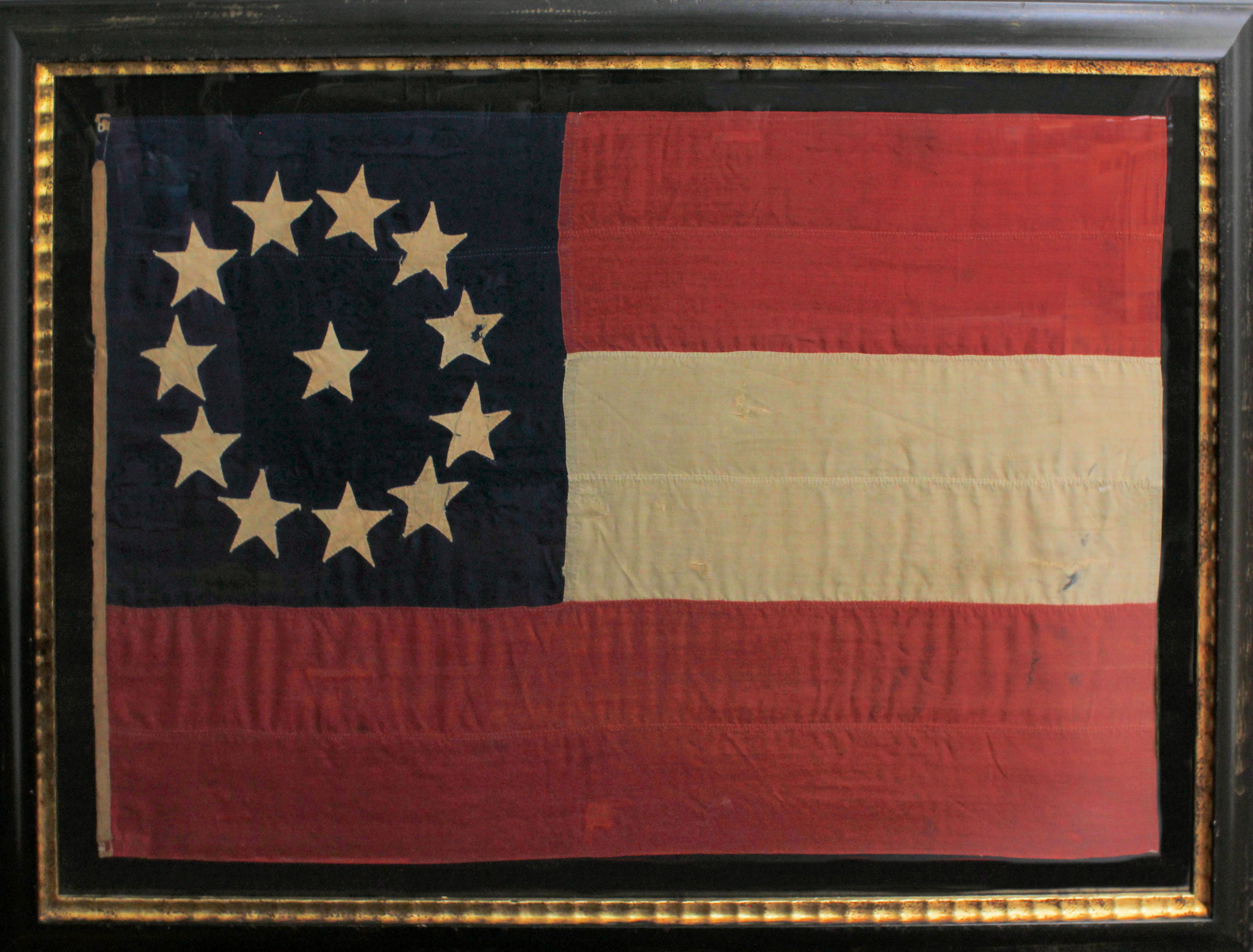
Confederate 1st National Flag
$33,000.00


The flag of the Confederacy rose and fell in only four years. It arose over a prosperous, peaceful nation whose mothers sent their husbands and sons to die, if need be, under its folds. And die they did, from the plains of Manassas to the fields of Pennsylvania, from Shiloh to Nashville, from the Wilderness to Appomattox.
The flag the Confederacy adopted as its National Standard on March 4, 1861 was first raised on Capitol Hill in Montgomery, Alabama. The honorable Jefferson Davis, ex-U.S. Secretary of War and new president of the Confederacy, invited Letitia Christian Tyler to raise the first official flag of the new Confederacy. Miss Tyler had been born in the White House, the capitol of the United States. She was the granddaughter of ex-U.S. President John Tyler. The seven star flag Miss Tyler raised that day has come to be known as the First National Confederate Flag, or the Stars and Bars.
There were only seven stars that day, but they speedily added to their number, eventually reaching 13 stars, and some few flags had 15 stars, including Delaware and Maryland. The circle of 11 stars and the center star in this flag’s canton represented the twelve Southern States that had seceded up until the time that the flag was made: South Carolina, Mississippi, Alabama, Florida, Georgia, Louisiana, and Texas, Virginia, Arkansas, Tennessee, North Carolina and the twelfth; on October 28, 1861, both chambers of the duly elected Missouri legislature passed an ordinance of secession in extra session in Neosho, Missouri. The ordinance was signed by the duly elected governor three days later, on October 31, 1861[i]. Kentucky would join the Confederacy on December 10, 1861 making the thirteenth state.
This does not mean that this flag was made specifically for Missouri, but rather that it was made between October 28th when Missouri voted to secede and December 10, 1861.
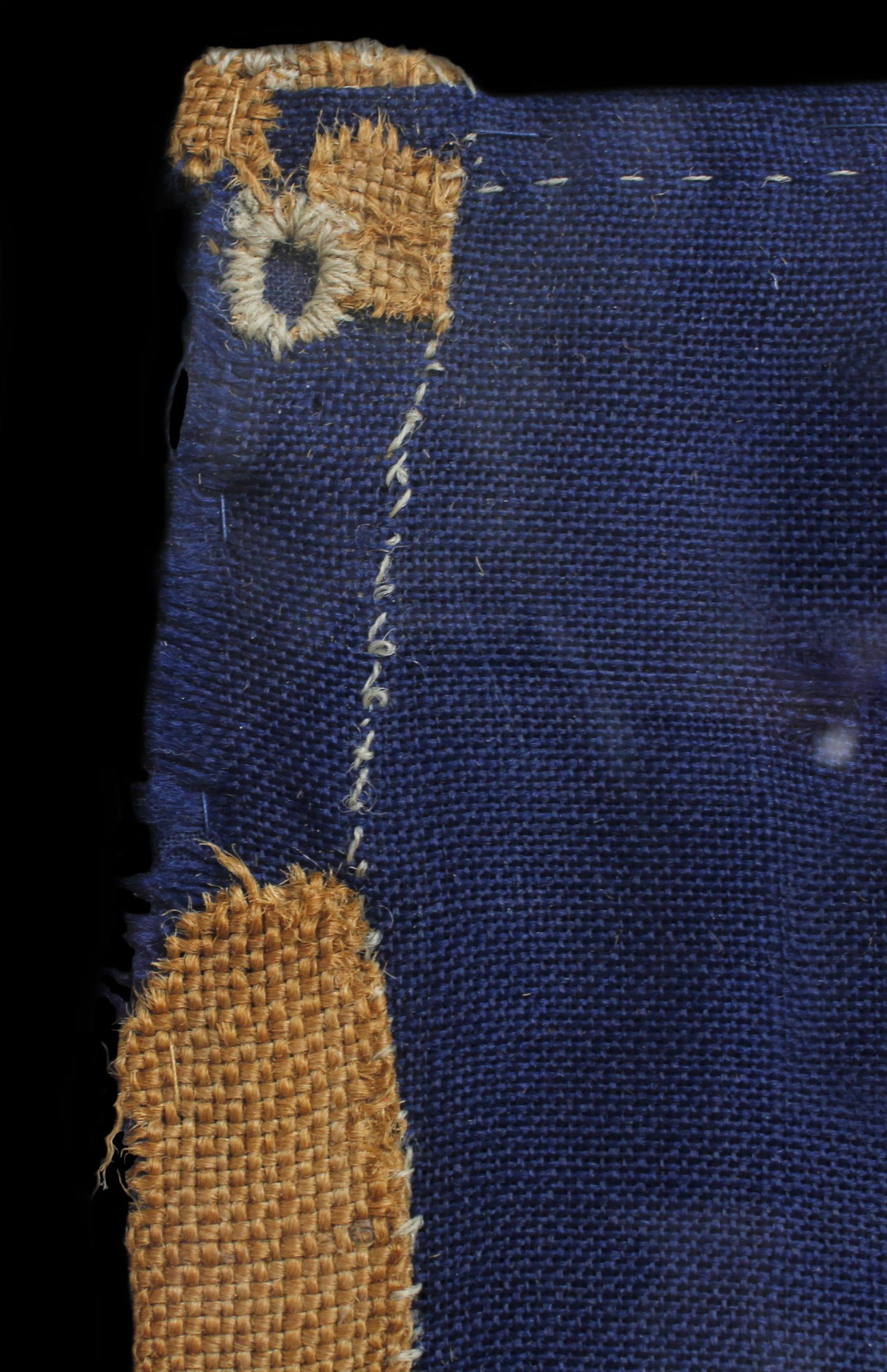
Most Confederate First National Flags were patriotic flags; flags meant for parade and party; very few were actual military flags. The party flag can be told from the fighting flag by their separate methods of construction. Patriotic flags had no need for heavy duty hoist edges and were constructed in a lighter manner overall. The heavy burlap hoist on this flag designates it as a military flag, though the unit is unknown. Vexillologist Howard Madaus posits that this was “most likely a Company flag or less likely a Regimental flag.” Either way, this was a military flag, which puts it in another class from the much more common patriotic flags.
The Confederate First National Flag shown here bears twelve appliquéd stars on each side of its 25×25 canton. The flag is 58” on the fly and 35” on the hoist. It is made of English bunting. The flag was originally well secured to the flagstaff by two whipped eyelets through the burlap hoist, which remain in good condition. There are some small missing pieces from losses in the field, but it is in very good condition overall. The colors remain bright.
The written provenance goes back to Norm Flayderman, in 1984 when he sought out Howard Madaus for information about the flag. Howard Madaus’[ii] report/letter to Norm Flayderman[iii] is included.
Heritage Flag Consultants (Josh Phillips) examined the flag and it comes with his report.
The flag was conserved and archivally mounted by Jeff Bridgman. It is ready to hang and enjoy.
The flag comes with a 2015 appraisal by Jeff Bridgeman Antiques for $36,500.00.
[i] Missouri’s Road to Secession, Wes Franklin. Abbeville Institute
[ii] Noted vexillologist Howard Madaus of the Milwaukee Public Museum, and later Cody Firearms Museum
[iii] Author and legendary collector
Contact Us:
Email: oldsouthantiques@gmail.com Phone: (804) 543-4597