OS-8075
Captain Samuel J. Richardson
$4,400.00


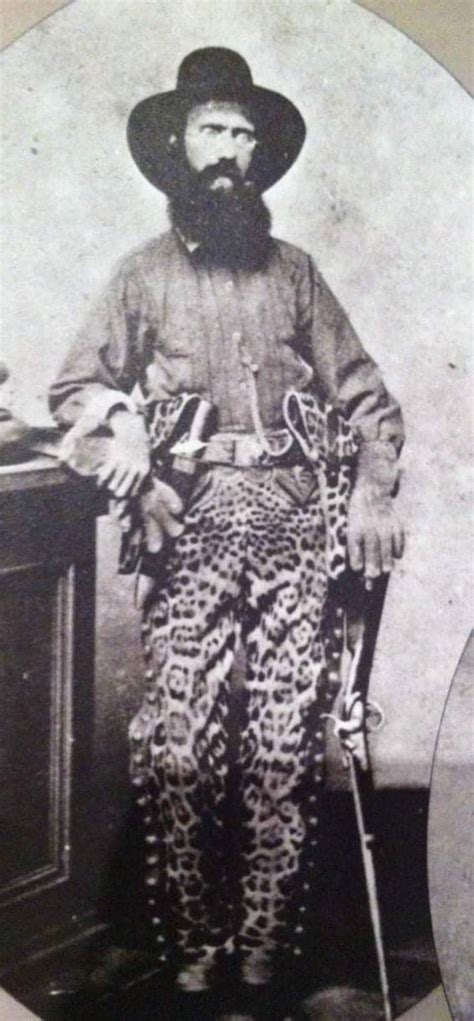

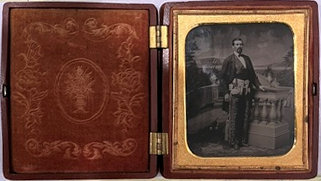

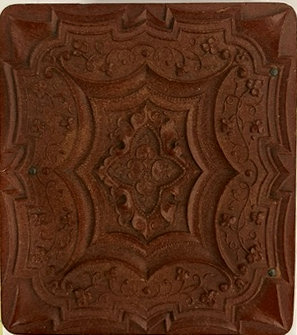
Unpublished 1/6th Plate Ambrotype of Confederate Captain Samuel J. Richardson Leopard Pants 1/6th plate ambrotype in a Gutta Percha Case of one of the most notable pair of pants in the Confederacy. This photo is of Confederate Captain Samuel J. Richardson. In the image it’s hard to miss his flamboyant leopard pants that have captivated historians for years. If there is one thing to say about this image it is that you will never find anything like it on the market again! This ambrotype was taken in California by Charles Weed and Vance prior to the American Civil War circa 1860-61.
Samuel J. Richardson, “Sam” (1826-1876) was a farmer, businessman, Confederate officer, state legislator, and police chief. He was was born in Virginia to William Stuart and Lavinia Richardson. Richardson married Edwina Frances Buchanan on February 27th, 1849. He immigrated with his family to Texas prior to 1855 and established himself as a farmer and sawmill owner. During the late 1850s he joined the Knights of the Golden Circle (KGC), an organization devoted to the preservation of Southern culture within the United States. In the spring of 1860 Richardson led the Harrison County “castle” of the Texas KGC as the broader KGC involved itself in political intrigues within Mexico and prepared an invasion of that nation by way of New Orleans and southern Texas. Richardson himself advocated launching such action in March 1860, but by the end of April confusion and infighting within the KGC leadership, which Richardson himself attempted to mediate, robbed the organization of its filibustering energy and precluded an invasion of Mexico.
At the end of February 1861, following the secession of Texas from the Union, Federal troops ceased defending northeastern Texas from Indian attacks and moved into Kansas. The following month Richardson organized a company of cavalry for service in frontier defense. This unit, part of the W. P. Lane Rangers (FIRST TEXAS PARTISAN RANGERS), was mustered on April 19th, with Richardson elected as captain.
Richardson clearly had a flair for the dramatic. According to contemporary accounts, he led his company in a parade through the main street of Marshall and halted in front of a gathering of Harrison County notables. With his troops at attention, Richardson, dressed in his trademark leopard-skin pants and brandishing a double-barreled shotgun-accepted a silk flag from a young woman and delivered a speech about Texan valor which caused the ladies present to weep. Following a two-week expedition against Comanches to the west of Harrison County, Richardson and his company arrived in Austin, where they and other companies from around the state were feted by the Austin City Light Infantry Company and reviewed by Governor Edward Clark.
Later in 1861, the W. P. Lane Rangers were mustered into Confederate service, first as Company F of the Second Regiment, Texas Mounted Rifles, and later as Company F, Second Texas Cavalry Regiment. Richardson was captain of this unit and served in this capacity throughout the War. Following his discharge from service on May 20th, 1865, Richardson returned to Harrison County where he resumed farming and engaged as a merchant.
With the arrival of Federal military authorities in Harrison County, Richardson assumed a leading role in the efforts to resist Reconstruction. On June 25, 1866, he won election -firmly within the Democrat and ex-Confederate bloc-as representative for Harrison and Panola counties to the Eleventh Texas Legislature. He served from August 6, 1866, to February 7, 1870. At the conclusion of his term, Richardson served as chief of police for Marshall. In late December 1867 he broke up a meeting of several hundred freedmen and military-appointed officials at the county courthouse by firing shots into the ceiling. In the ensuing chaos, known as the Marshall Riot, Richardson and several others were arrested by military authorities. No charges were filed, however, as Richardson and the others were released a week later by a sympathetic judge.
Richardson kept a low profile through the spring of 1868, but following the formation of a Union League in Harrison County and a series of victories for the black electorate, reemerged as a leader in precinct “conservative clubs,” designed to roll back the tide of Congressional Reconstruction.[i]
The 1870 census listed Richardson living in Marshall with his wife, two sons, and a daughter. Richardson died on December 19, 1876, and was buried at Marshall City Cemetery, Harrison County.
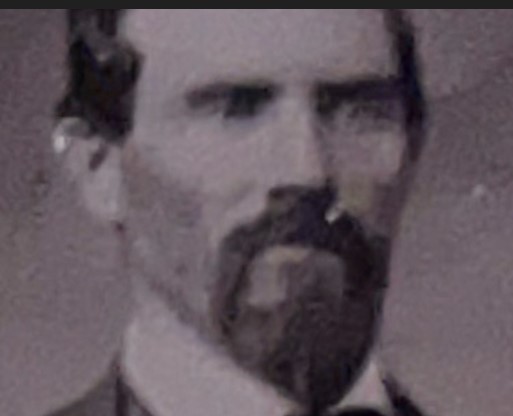
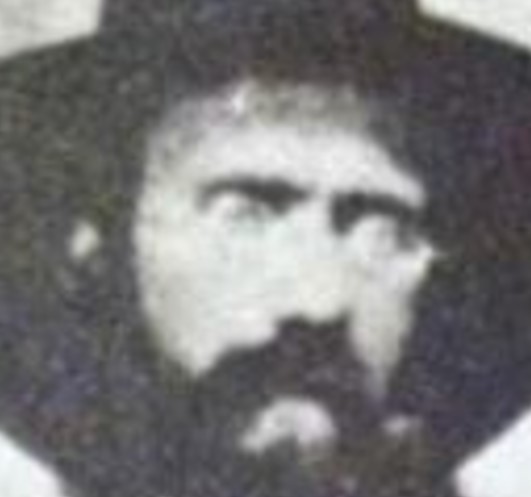
In addition to where this image was discovered and the unique trousers taken a face value, you will note in the comparative image that the fourth button on the viewers left leg, is a cuff button in both images. Also note the low brow and the curve of each subjects nose.
[i] Most of the above information was provided by Colton Massie of Massie’s Antiques
Contact Us:
Email: oldsouthantiques@gmail.com Phone: (804) 543-4597