OS-8062
Ultra Rare Enlisted Frock
HOLD


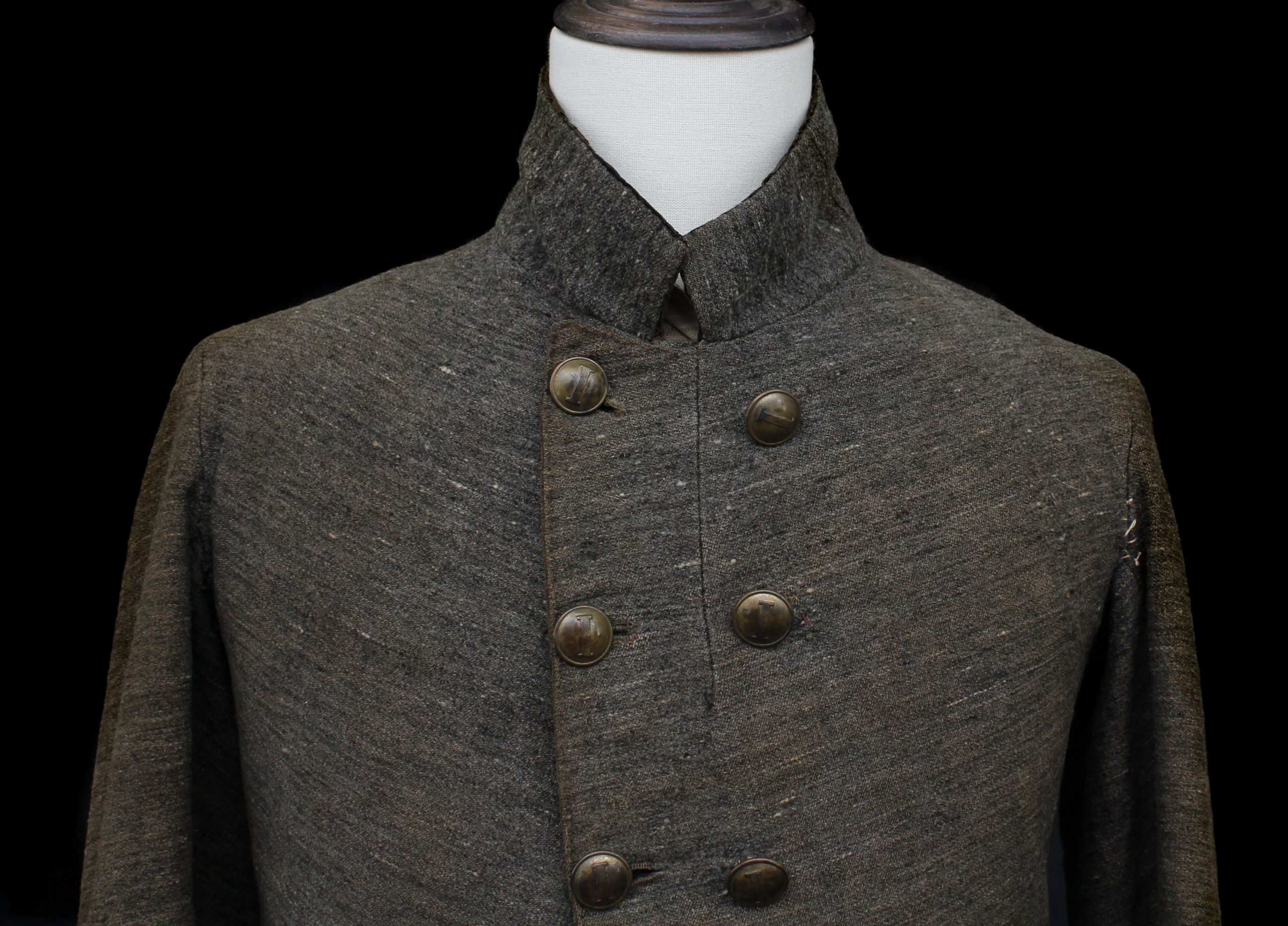
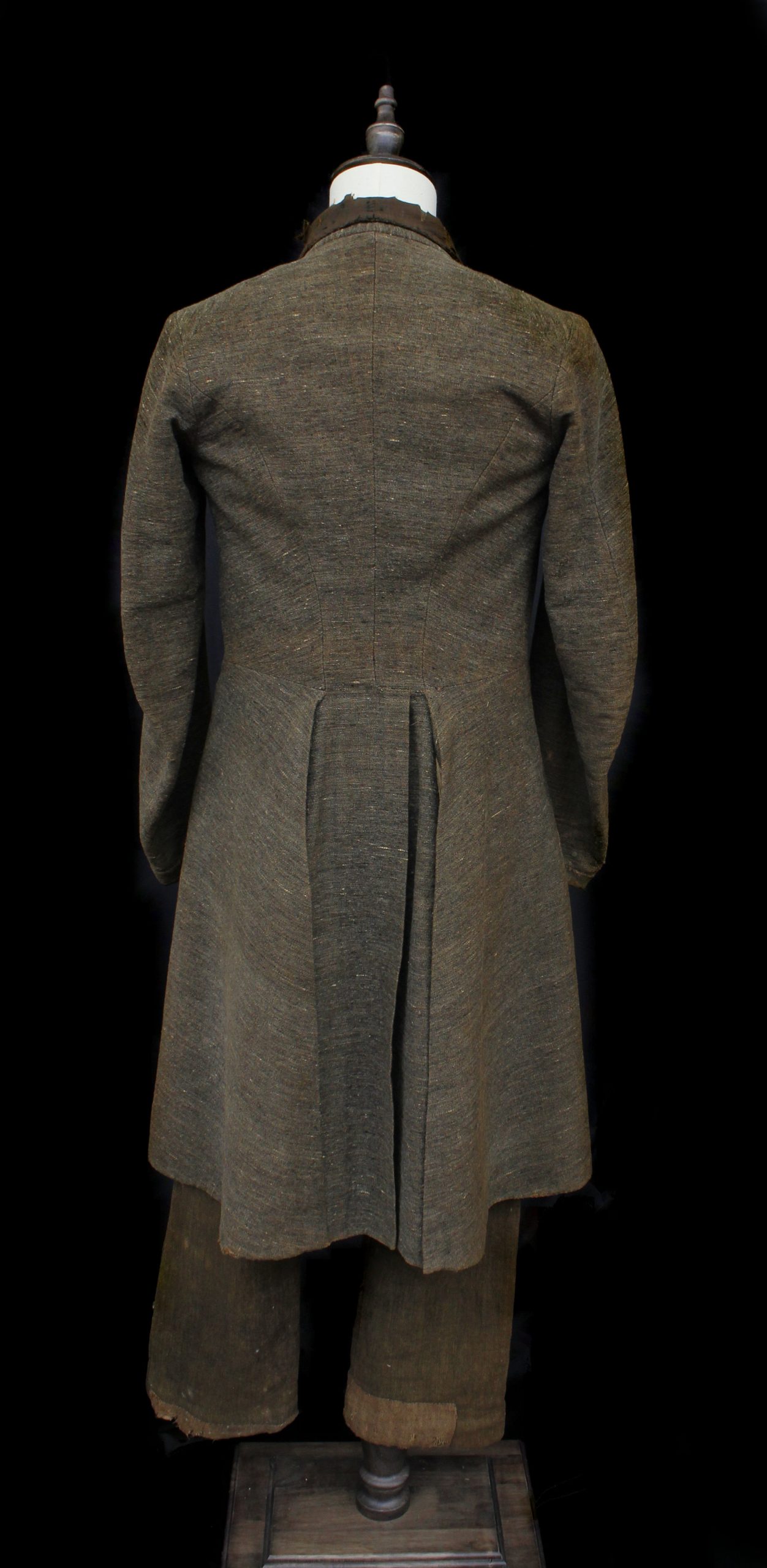

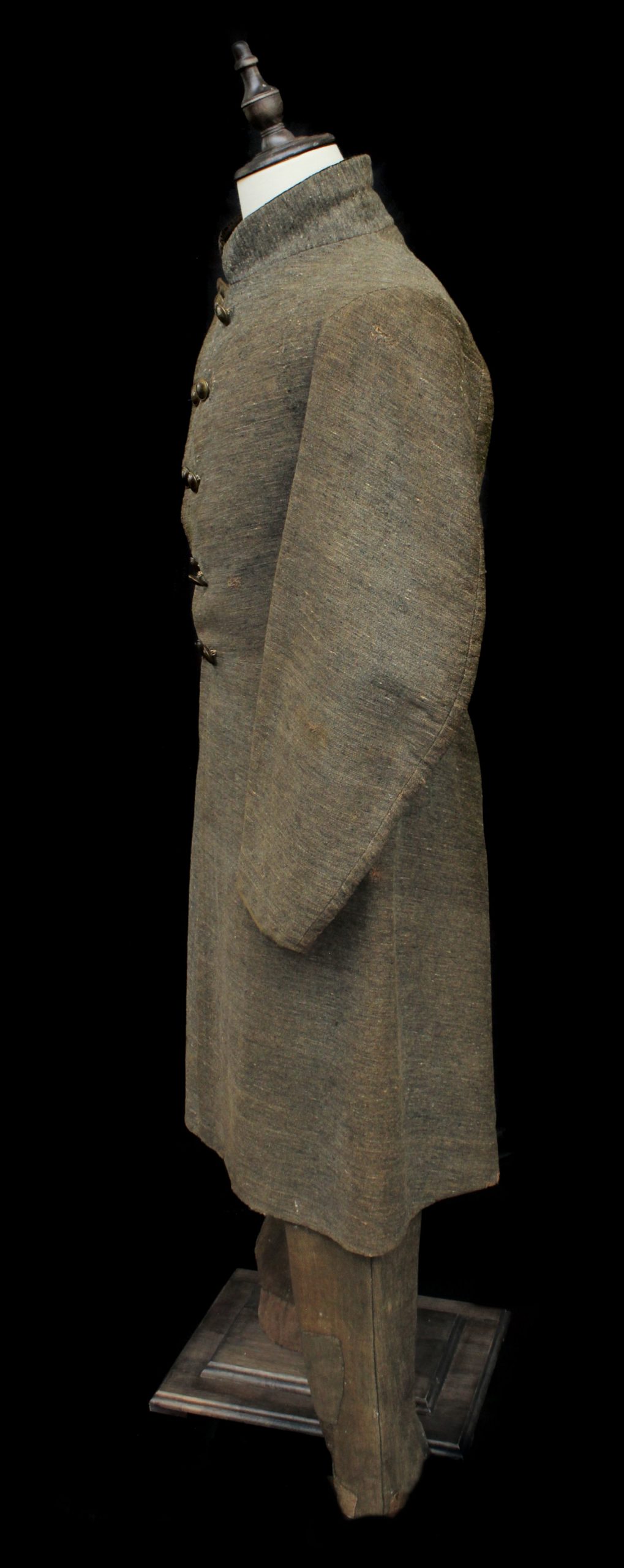
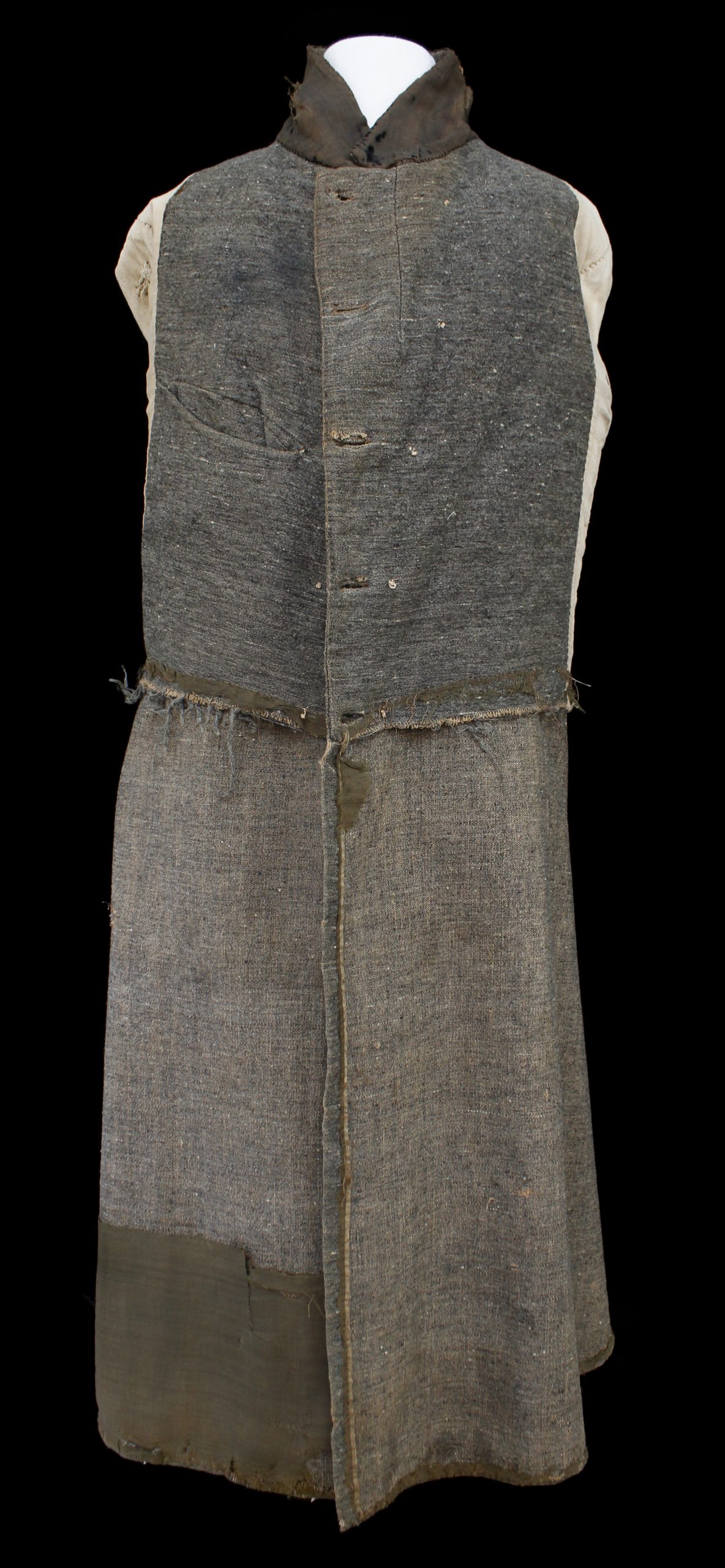
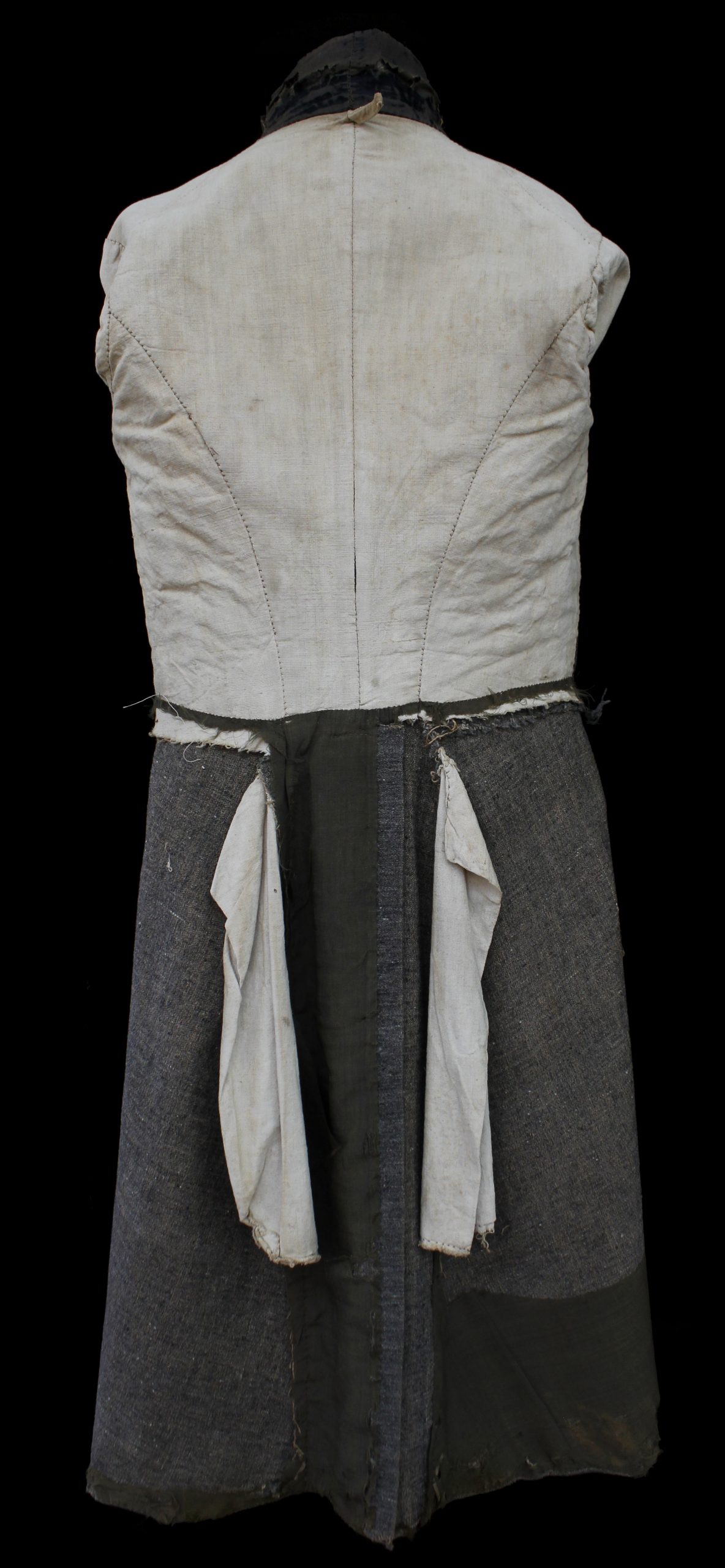
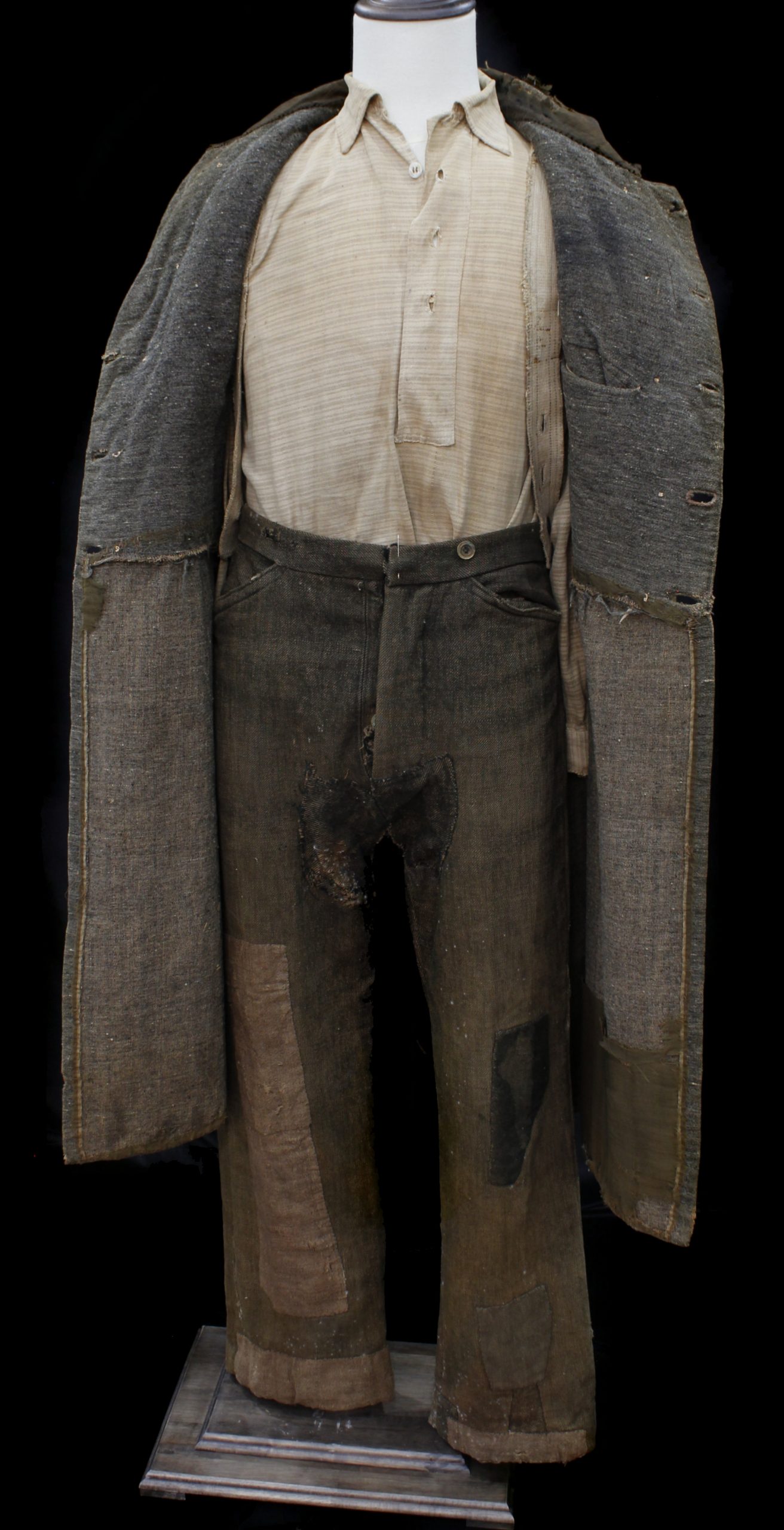
The early War regulation infantry coat shown here is a true rarity and to have one that is so very well provenanced is almost unheard of. The coat’s unbroken chain of ownership history goes all the way back to its capture by Lt. J.W. Jenkins of the 27th Kentucky Volunteers at Wildcat Gap on October 16, 1862.
The 27th Kentucky was organized at Rochester, Kentucky and mustered in on March 21, 1862.
Wildcat Gap is a location in Kentucky known for its historical significance during the Civil War, particularly as the site of the Battle of Camp Wildcat on October 21, 1861, which was one of the first engagements of regular troops in the state. The Kentucky Historical Society’s marker for Camp Wildcat itself physically stands in neighboring Laurel County along the old Wilderness Road, but the Explore KY History entry emphasizes that the camp guarded the Rockcastle River crossings and notes its location along the mountain road between London and Mt. Vernon. Camp Wildcat was used by the Confederates to guard the Rockcastle River Bridge. After the Battle of Perryville on October 8, 1862, the 27th Kentucky skirmished at Danville, Kentucky on October 11th, then marched to near Crab Orchard on the 15th, the following day they attacked the Confederates stationed at Camp Wildcat guarding the Big Rockcastle River Bridge on October 16th. A compiled list based on the Official Records cites a “Skirmish at Big Rockcastle Creek” on October 16th, “Skirmishes about Camp Wild Cat” on October 17th, and “Skirmish at Little Rockcastle River” on October 18th, followed by further contact near Wildcat on October 19th and 20th. In one of these skirmishes, this frock coat, and a “snuff box” full of caps, a Remington revolver, serial number 28856, and a plain bowie knife and belt were captured by Lt. Jenkins. Lt. Jenkins gave these items to his grandson Hugh W. Shick, of N. Hollywood California.
Lt. Jenkins’ grandson sold the coat to old time dealer Leon “Red” Jackson in 1971, who sold it to collector Bill Bond the same year (the buttons are documented to have been on the coat at that time). Bill Turner and Dave Mark became co-owners in 1994. They sold it to renowned collector Michael Kramer. Kramer sold it to Brian Akins in 2012 to Eric Bailey, a private collector. Eric Bailey sold it to Old South Military Antiques in February of 2023. A letter detailing much of the above typed by Mr. Hugh Schick and on his letterhead comes with the coat.
The “Adjutant and Inspector General’s Office, Richmond, VA June 6,1861” prescribed the official “Uniform and Dress of the Army”, the Tunic for enlisted men to be:
“The uniform coat for all enlisted men shall be a double breasted tunic of gray cloth; known as cadet gray with the skirt extending half way between the hip and knee; two rows of buttons on the breast, seven in each row, (this has five); the distance between rows four inches at top and three inches at bottom, (this is four at top and two at bottom); stand up collar, to rise no higher than to permit the chin to turn freely over it”.
These coats are so very rare because it did not take long for the government to realize that the tunic took up too much cloth and the double breasted design used too many buttons, so the “shell jacket” was substituted as these double breasted frocks were replaced. And, they were issued so early, that almost none survived the War. The only reason this one did was because it was captured in the fall of 1862.
This particular example is made of home-dyed, homespun woolen-cotton jeans cloth. It carries fourteen infantry “Lined I” buttons with Superior Quality backmarks, set in two rows of seven each, that are four inches apart at the top and two inches at the bottom. All of the buttons have been resewn but they are so evenly matched in patina that I have no reason to suspect that they are not the original buttons.
The tunic drops to the mid-thigh and there are two pockets set into the tail, which are still in very good condition. A pocket is set into the left breast. Originally the skirt was lined, but this seems to have been intentionally removed for summer use. The coat is in very good condition, but has never been cleaned since the War so it has the finest natural as “worn in service” look I perhaps have ever seen.
The coat comes with Theopolis Frank’s shirt, trousers and suspenders, and the mannequin that they are displayed on. Theophilus Frank (1823-1884) was born in Davidson County, North Carolina and enlisted in the 48th North Carolina in 1863. I assume that the shirt and suspenders are reconstruction era. I believe the trousers are from the war, but have some later alterations/repairs. However, since I cannot be 100% sure that his trousers are his uniform pants, they are thrown in for free because they display so well with the group.
Contact Us:
Email: oldsouthantiques@gmail.com Phone: (804) 543-4597